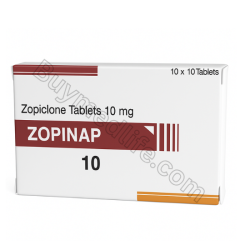
Zopinap 20 mg – Zopiclone Tablets for Insomnia Relief

- Stock: In Stock
- Brand: JEERIMA
- Model: ZOPINAP 20 MG
- SKU: ZOPI20
- Active Ingredient: Zopiclone
- Treatment: Insomnia
- Alcohol: Do Not Drink
Available Options
About Zopinap 20 mg Zopiclone Tablets
Zopinap 20 mg Zopiclone Tablets are formulated with zopiclone 20 mg, a hypnotic agent indicated for the short-term management of insomnia. Insomnia refers to difficulty initiating sleep, frequent nocturnal awakenings, or premature morning waking with inability to resume rest. Zopiclone belongs to the class of sedative-hypnotics, commonly referred to as sleeping tablets. It exerts its action on the central nervous system, facilitating quicker sleep onset and promoting more sustained, uninterrupted sleep architecture.
This medication is primarily reserved for cases where sleep disturbance is severe, functionally impairing, or associated with significant distress. In clinical practice, it may assist with sleep initiation, reduce night-time arousals, and enhance overall sleep quality. Its use is generally restricted to short durations, as physiological adaptation can occur with continued exposure. In select clinical scenarios, it may be employed for transient sedation under strict medical oversight, though this is not its principal therapeutic indication.
It is essential to understand that zopiclone addresses the symptom of sleeplessness rather than its underlying etiology. Accordingly, it is often combined with non-pharmacological strategies such as structured sleep hygiene, consistent sleep timing, reduced caffeine intake in the evening, and avoidance of electronic screens before bedtime. When insomnia is secondary to anxiety, depression, chronic pain, respiratory conditions, or other medical disorders, those contributing factors require comprehensive evaluation and management.
Key Benefits of Zopinap 20 mg Zopiclone Tablets
Zopinap 20 mg is intended for short-term support in adults experiencing pronounced insomnia. Its primary advantage lies in improving sleep initiation. Many users also report fewer nocturnal awakenings and extended total sleep duration, resulting in a more consolidated and restorative sleep experience.
Another notable advantage is its rapid onset of action. When administered appropriately at bedtime, zopiclone typically begins working within a short interval, making it particularly useful for individuals who experience prolonged sleep latency.
Enhanced sleep quality may translate into improved daytime functioning. Some individuals experience reduced fatigue, sharper cognitive performance, and diminished irritability associated with chronic sleep deprivation. These outcomes, however, are contingent upon correct usage and adequate sleep duration; insufficient sleep time may still result in residual drowsiness the following day.
Given the multifactorial nature of insomnia, expectations should remain realistic. Zopiclone offers short-term symptomatic relief rather than a definitive cure for chronic sleep disorders. A prudent approach involves limited-duration use alongside behavioural and medical interventions targeting underlying sleep disruptions.
Active Ingredient
Active Ingredients
The active pharmaceutical ingredient is zopiclone 20 mg. It acts upon gamma-aminobutyric acid (GABA) receptors within the central nervous system. GABA is an endogenous neurotransmitter responsible for reducing neuronal excitability and promoting neural calmness. By potentiating this inhibitory pathway, zopiclone facilitates sleep induction and maintenance.
Although structurally distinct from benzodiazepines, zopiclone exhibits a comparable pharmacodynamic profile at the GABA-A receptor complex. This interaction produces sedative and hypnotic effects, effectively decreasing sleep latency and nocturnal awakenings.
The therapeutic effect is derived from the single active compound rather than a combination formulation. The tablet also contains inactive excipients that support stability, absorption, and manufacturing consistency. These components do not contribute to the pharmacological effect but are essential for dosage integrity. Individuals with known sensitivities should review the complete excipient profile prior to use.
Usage Instructions
Zopinap 20 mg should be taken strictly according to medical guidance. It is generally administered immediately before bedtime with water. Early evening consumption is discouraged unless specifically instructed, as it may induce premature sedation and reduced alertness.
The medication should only be taken when a full night’s sleep is possible. This precaution is important because residual effects may impair coordination, memory, and reaction time if sleep is interrupted. A second dose within the same night must be avoided.
Treatment should utilize the lowest effective dose for the shortest feasible duration. Typical courses range from several days to a few weeks, including tapering periods if required. Prolonged use may lead to tolerance, where efficacy diminishes, and dependence, where abrupt discontinuation triggers withdrawal phenomena or rebound insomnia—characterized by transient worsening of sleep.
Alcohol consumption is strictly contraindicated. Concurrent use with other central nervous system depressants should only occur under medical supervision. If a dose is missed at bedtime, it should not be taken later during the night or the following morning.
Side Effects of Zopinap 20 mg Zopiclone Tablets
Common adverse effects include a bitter or metallic taste, xerostomia (dry mouth), daytime somnolence, dizziness, headache, and reduced next-day alertness. Some individuals may experience impaired coordination, particularly when adequate sleep duration is not achieved.
Less frequent reactions include cognitive disturbances, transient memory impairment, confusion, vivid dreaming, mood fluctuations, and gastrointestinal discomfort. Rare but clinically significant effects may involve parasomnias such as sleepwalking, hypersensitivity reactions, or exacerbation of depressive symptoms.
Elderly patients and those consuming alcohol, opioids, or other sedatives are at heightened risk of adverse outcomes. Medical consultation is advised if side effects are severe, persistent, or atypical in nature.
Safety Advice
Zopiclone is not appropriate for all individuals. Medical history involving hepatic impairment, respiratory dysfunction, sleep apnoea, myasthenia gravis, substance misuse disorders, or psychiatric illness should be disclosed prior to use. Elderly patients require additional caution due to increased susceptibility to sedation-related falls and confusion.
Activities requiring full cognitive alertness, such as driving or operating machinery, should be avoided if drowsiness persists. Alcohol must be strictly avoided throughout treatment. Long-term therapy should never be discontinued abruptly without medical supervision due to potential withdrawal symptoms.
Use during pregnancy and lactation is generally not recommended unless clinically justified. The product must be stored securely and kept out of reach of children.
FAQ
Q: What is Zopinap 20 mg used for?
A: It is prescribed for short-term management of insomnia, particularly when sleep disruption significantly affects daily functioning. It supports sleep onset, maintenance, and overall sleep continuity.
Q: How quickly does zopiclone work?
A: The onset is typically rapid when taken at bedtime. It should only be used when immediate sleep is intended and a full night’s rest is possible.
Q: Can I take Zopinap 20 mg every night?
A: It should only be used as directed by a healthcare professional. Extended use increases the risk of tolerance, dependence, and withdrawal symptoms.
Q: Can I consume alcohol while using this medicine?
A: No. Alcohol potentiates sedative effects and increases the risk of excessive drowsiness, respiratory depression, and abnormal sleep behaviours.
Q: Why do some people experience a bitter taste?
A: Dysgeusia, or altered taste perception, is a common side effect of zopiclone. It is generally benign but may be bothersome.
Q: What should I do if I feel drowsy the next day?
A: Avoid driving or operating machinery. Ensure sufficient sleep duration was achieved. If symptoms persist, medical review may be necessary.
Consult a qualified healthcare professional before use.