
River Blindness: Causes, Symptoms, Treatment & Prevention
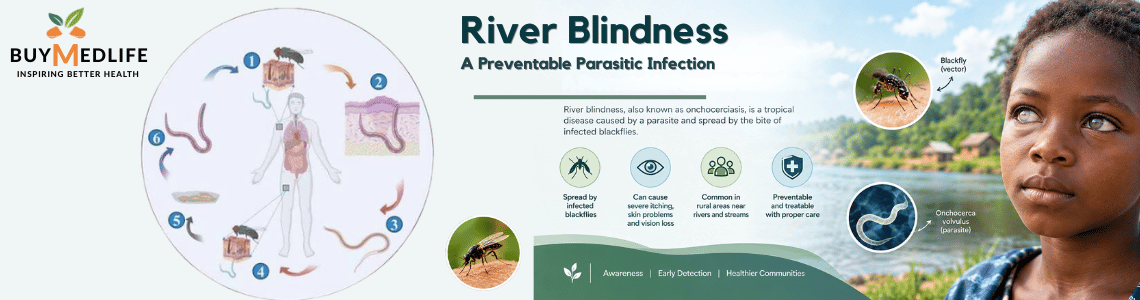
Imagine living in a neighborhood next to a river that flows all the time, where the water helps with growing crops, catching fish, and getting through daily tasks. Now think about the place having a little bug that can pass on a parasite that might hurt the skin and the eyes. This is what life is like for people affected by river blindness, which is also called onchocerciasis. River blindness is a disease caused by a worm named Onchocerca volvulus. It spreads when people get bitten by blackflies that are infected. These blackflies like to live near rivers and streams that move quickly. The disease can lead to itching and changes in the skin and, in some cases, serious eye problems and loss of eyesight forever. But there is something to remember: river blindness can be treated and managed. Large efforts to treat the disease have helped many countries make progress in getting rid of it.
What Exactly Is River Blindness?
The name "river blindness" can sound confusing because many people think the disease comes from river water itself. I find that the real story is quite different. River blindness does not arise from the water; it takes its name from the blackflies that carry the parasite.
Instead the name comes from the blackflies that transmit the parasite. Those blackflies breed in fast‑moving water near rivers and streams. When an infected blackfly bites a person, tiny larvae can enter the body. River blindness begins with those larvae.
Inside the body, the larvae eventually grow into adult worms. River blindness adult worms settle in nodules beneath the skin. Release thousands of microscopic larvae called microfilariae. Those microfilariae travel through tissues under the skin. Can reach the eyes. When they die, the body’s inflammatory reaction can damage tissue. Over time, repeated or severe infection may cause vision problems. In the worst cases, river blindness can lead to blindness.
How Does River Blindness Spread?
River blindness is spread by the bite of an infected Simulium blackfly.
The transmission cycle is surprisingly simple:
A blackfly bites a person who has the parasite.
The fly picks up microscopic larvae from the person's skin.
The larvae develop inside the blackfly.
The infected fly bites another person.
Infective larvae enter the new person's body.
The parasites eventually mature and reproduce.
Repeated exposure to infected blackflies increases the risk of infection. This is why people who live or work for long periods in endemic rural areas can be particularly vulnerable.
Importantly, river blindness is not normally spread through casual contact between people.
What Are the Symptoms of River Blindness?
One of the tricky things about onchocerciasis is that some infected people may not have noticeable symptoms, particularly during the early stages.
When symptoms do occur, they can affect both the skin and eyes.
Common symptoms include:
Intense or persistent itching
Skin rashes
Changes in skin colour or texture
Lumps beneath the skin
Eye inflammation
Reduced vision
Progressive vision loss
According to the CDC, symptoms can take many months to develop, and some infected people remain without obvious symptoms.
This delayed nature of the infection can make diagnosis difficult without appropriate medical testing.
Why Can River Blindness Affect the Eyes?
The link between the parasite and vision is one of the serious parts of this disease. Microfilariae can move into the tissues around the eye. Even inside the eye. When these parasites die, the body reacts with inflammation, which can harm parts of the eye. Over time, if the infection is not treated it can lead to damage to the cornea and other eye problems. In long-standing and severe cases this damage can lead to permanent blindness. That is why spotting the disease early and getting the treatment is so important in areas where this disease is common.
Who Is Most at Risk?
River blindness mainly happens in areas where blackflies that carry the disease live. I notice that the disease stays around places with wet weather.
Than ninety‑nine percent of people who get river blindness live in sub‑Saharan Africa. Still, river blindness can also spread in some parts of Yemen and in Latin America. I think this shows how spread out the problem can be.
People who spend a lot of time by fast‑moving rivers and streams in places where river blindness is common may get more blackfly bites. I see that this extra contact can raise the risk.
Long‑term residents and workers who go out near rivers may face a higher cumulative river blindness risk, than visitors who stay only a short time. I understand that staying longer near the water increases the chance of getting bitten.
How Is River Blindness Diagnosed?
If a healthcare professional suspects onchocerciasis, several approaches may be considered. One diagnostic method used is a skin-snip examination. In this method, a small sample of skin is taken and examined for microfilariae. Healthcare professionals may also examine the eyes. Look for nodules beneath the skin. Blood tests may sometimes provide information, although they may not specifically identify onchocerciasis. The appropriate diagnostic approach depends on the person's symptoms, travel or residence history, and exposure risk.
How Is River Blindness Treated?
Treatment focuses on controlling the parasite and preventing damage caused by the disease.
Ivermectin is the medicine used in large-scale programs against onchocerciasis. It kills the microfilariae that cause many of the symptoms but does not kill adult worms directly. WHO recommends repeating the treatment as part of elimination programs, with the plan depending on the people affected and the local situation.
Another medicine, doxycycline, can affect the Wolbachia bacteria that adult O. Volvulus worms need to survive and may therefore be used in some situations. Decisions about treatment should be made by a healthcare professional who is properly trained.
There is a safety consideration in some parts of Central Africa. People in these areas might have an infection called loiasis, which comes from the parasite Loa loa. When someone has an amount of this parasite in their body giving them ivermectin can lead to serious side effects. This means that treatment plans must take into account the disease patterns and the chance that people may be infected with both loiasis and other parasites at the same time. It is essential to assess each case before using ivermectin.
Can River Blindness Be Prevented?
There is currently no vaccine that prevents onchocerciasis. Prevention therefore focuses heavily on reducing exposure and controlling transmission within communities.
For individuals travelling to areas where blackflies are present, practical insect-bite precautions can help reduce exposure. These may include wearing clothing and using appropriate insect repellents.
However, personal protection is one part of the bigger picture.
Large-scale community treatment programs are central to controlling and eliminating river blindness. WHO reports that more than 171 million people received ivermectin treatment in Africa in 2024, demonstrating the enormous scale of these public-health programmes.
River Blindness and Global Elimination Efforts
The story of river blindness is not only about disease—it is also about what coordinated public-health action can accomplish.
Several countries have already achieved major milestones. WHO verified Niger in 2025 as having interrupted transmission of onchocerciasis, making it the first country in the African region to achieve this status. Colombia, Ecuador, Mexico and Guatemala were previously verified as having interrupted transmission.
These achievements show that sustained treatment, community participation, surveillance, and public-health programs can make a meaningful difference.
When Should You Speak to a Doctor?
If you have lived in or spent time in an area where river blindness occurs and you start to feel persistent itching, notice unusual skin changes, find lumps under the skin or have unexplained vision problems, you should speak with a healthcare professional.
Tell them about your travel or residence history in river blindness areas. This information can be especially useful because symptoms can appear after exposure.
Do not self-diagnose based on itching or skin changes. Many other conditions can cause symptoms and proper testing is important.
Final Thoughts
River blindness may be caused by a tiny parasite, but its impact can be enormous.
For affected communities, the disease can mean years of severe itching, skin changes, reduced vision and, in serious cases, permanent blindness. At the same time, decades of public-health work have shown that the disease can be controlled and, in some places, eliminated.
Understanding how river blindness spreads is therefore more than a medical lesson. It highlights the importance of prevention, community treatment, early diagnosis, and continued investment in neglected tropical disease programmes.
The good news is that progress is happening. With sustained treatment and coordinated elimination efforts, the goal of reducing and eventually ending transmission becomes increasingly achievable.
FAQs About River Blindness
1. What is river blindness?
River blindness, also called onchocerciasis, is a parasitic infection caused by the worm Onchocerca volvulus. It is transmitted through repeated bites from infected blackflies, which commonly breed near fast-flowing rivers and streams.
2. What causes river blindness?
River blindness is caused by Onchocerca volvulus. An infected blackfly can transmit the parasite when it bites a person. The parasite can eventually affect the skin and eyes.
3. What are the symptoms of river blindness?
Common symptoms include intense itching, skin rashes, changes in skin appearance, lumps beneath the skin and eye problems. Severe or longstanding infections can cause vision loss and, in some cases, blindness.
4. Can river blindness be treated?
Yes. River blindness can be treated. Ivermectin is the medicine used to control the infection and is widely used in community treatment programmes. Treatment should be guided by a healthcare professional. It is important to follow the advice of a doctor or nurse when taking any medicine. The right care at the time can make a big difference, in staying healthy.
5. Can river blindness cause permanent blindness?
Yes. A severe or long-lasting infection can harm the eyes. Might lead to permanent vision loss. Finding the problem early. Getting the right treatment can help lower the chance of serious issues.
6. Is river blindness contagious?
River blindness is not normally spread directly from one person to another. It is transmitted through the bites of infected blackflies.
7. Where is river blindness most common?
River blindness occurs mainly in sub-Saharan Africa. Transmission has also occurred in limited areas of Yemen and Latin America.
8. How can river blindness be prevented?
Prevention focuses on reducing exposure to blackflies and controlling transmission through community-wide treatment programmes. When travelling in areas taking insect-bite precautions such, as wearing suitable clothing and using insect repellent may help reduce exposure.
9. Does river water cause river blindness?
No. Drinking or touching river water does not directly cause river blindness. The illness gets its name because the blackflies that spread the parasite usually live near moving rivers and streams. The illness gets its name because the blackflies that spread the parasite usually live near moving rivers and streams.
10. When should I see a doctor about possible river blindness?
If you have lived in an area that has been affected or have travelled a lot to places and you have ongoing itching, strange changes, in your skin lumps or unexpected vision problems talk to a doctor. Tell them about your travel history or where you have lived so they can check your risk properly.
3 Comment(s)
At this time it sounds like BlogEngine is the best
blogging platform available right now. (from what I've read) Is that what you are using on your blog?
Greetings from Ohio! I'm bored to death at work so I decided to
browse your site on my iphone during lunch break. I really like the knowledge you present here and can't wait to
take a look when I get home. I'm shocked at how fast your blog loaded on my phone
.. I'm not even using WIFI, just 3G .. Anyhow, fantastic blog!
Excellent way of describing, and good piece of writing to obtain information about my presentation subject matter,
which i am going to convey in academy.
Leave a Comment